Share Certificate Format- Crucial for Every Shareholder
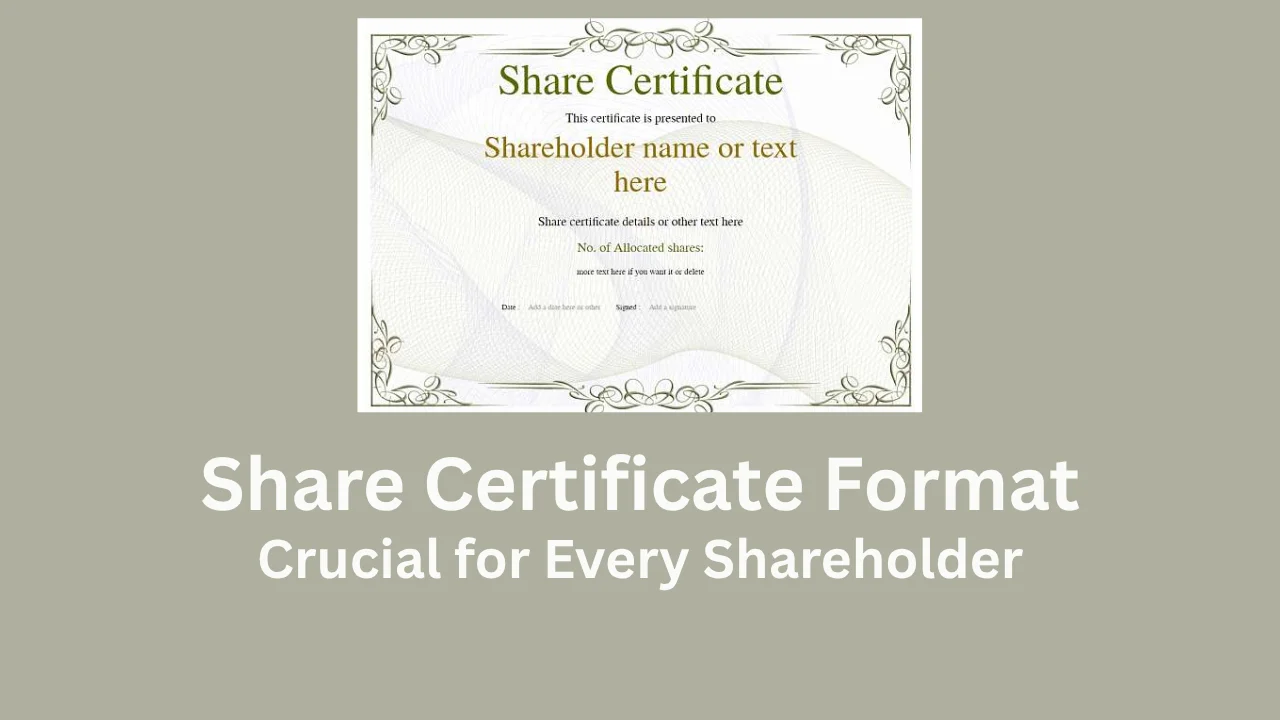
A share certificate format serves as an essential document that signifies the ownership of shares in a company. When you buy or transfer shares, this certificate acts as the official proof of your legal ownership. For anyone new to investing or business operations, knowing what a share certificate is, its importance, and how to create one is key. In this article, we’ll dive into the specifics of the share certificate format and why it’s crucial for any shareholder. If you’re interested in knowing the current hdb financial unlisted share price, it can help you understand how share prices can influence the process of obtaining a share certificate.
What is a Share Certificate?
A share certificate format is a legally binding document issued by a company to its shareholders, confirming their ownership of shares. Essentially, this certificate indicates the number of shares owned by a shareholder, the class of shares (such as ordinary or preference), and other details that authenticate ownership.
The share certificate format may look different across companies, but certain elements must always be present. These elements ensure that the certificate meets legal standards and serves its purpose as proof of share ownership.
Importance of a Share Certificate
A share certificate format is crucial because it protects the rights of shareholders and provides a record of share transactions. The certificate contains essential details, including the shareholder’s name, the number of shares, the class of shares, and the date of issue. This information allows the shareholder to transfer or sell shares easily.
Without a share certificate, it would be difficult to establish ownership, especially when dealing with the transfer of shares. For companies, issuing this certificate is part of ensuring transparency in shareholder ownership, which is necessary for governance and compliance.
Key Elements of a Share Certificate Format
While the layout and style of a share certificate format can vary from one company to another, it typically contains the following key elements:
Certificate Number: This is a unique number assigned to the certificate for identification purposes. It’s used for tracking the certificate in the company’s records.
Company Name: The legal name of the company issuing the certificate must be clearly stated. It helps identify the company that issued the shares.
Shareholder’s Name: The full name of the shareholder who owns the shares must appear on the certificate. This confirms the identity of the person holding the shares.
Address of Shareholder: While this is not always required, the shareholder’s address is sometimes included for official purposes.
Number of Shares: The total number of shares held by the shareholder, clearly stated in both numeric and word formats, is an essential part of the share certificate format.
Class of Shares: Whether the shares are common, preference, or any other class, it should be mentioned. This helps differentiate between different types of shares a company might issue.
Date of Issue: The date when the share certificate is issued should be noted. This date is important for regulatory and legal purposes.
Signature and Seal: The certificate must bear the signatures of the company’s authorized representatives, often a director or company secretary. The company’s official seal may also be included.
Legal Statement of Ownership: A brief statement confirming the ownership of the shares. It assures the shareholder that they are legally registered as the owner of the shares issued.
Transfer Restrictions: Some companies may include clauses that restrict the transfer of shares unless the certificate is surrendered.
How to Format a Share Certificate
Creating a share certificate format may seem daunting, but with the right structure, it’s relatively simple. Here is a breakdown of how a typical share certificate might be formatted:
| Element | Details |
|---|---|
| Company Name | [Full name of the company] |
| Certificate Number | [Unique certificate number] |
| Shareholder’s Name | [Shareholder’s name] |
| Number of Shares | [Total number of shares held] |
| Class of Shares | [Ordinary, preference, or any other type] |
| Date of Issue | [The date the certificate was issued] |
| Signature | [Signature of the authorized representative] |
| Seal | [Company’s official seal, if applicable] |
| Legal Statement | “This is to certify that the shareholder is the registered holder of the shares in the company.” |
The Role of a Share Certificate in Business Operations
In business operations, the share certificate format is often used to track and manage share ownership. When a company issues shares, it must provide certificates to its shareholders. These certificates act as legal proof of ownership and are necessary for shareholders to claim dividends, attend shareholder meetings, and transfer their shares.
In the case of private limited companies, the share certificate format is especially important because it formalizes the company’s shareholder records. For public companies, shares are often traded on stock exchanges, and while certificates might be less common due to electronic trading, they are still issued when shares are first acquired.
How to Transfer Shares Using a Share Certificate
When shareholders decide to sell or transfer their shares, the share certificate format becomes a vital part of the process. Typically, the transferor (the person selling the shares) must sign the share certificate, which is then presented to the company’s registrar or share registrar.
The company will then update its shareholder registry to reflect the transfer, and a new share certificate is issued to the new shareholder. This ensures that the ownership record remains accurate, and both the buyer and seller have proof of the transaction.
Share Certificates and Corporate Compliance
A share certificate format also plays a role in corporate compliance. For a company to maintain legal transparency, it must keep accurate records of its shareholders. This is important not only for ownership verification but also for voting rights, dividend distribution, and other corporate matters.
The Process of Issuing a Share Certificate
Issuing a share certificate format involves several steps. Once a shareholder purchases shares from a company, the company’s registrar prepares the certificate. This process starts with recording the shareholder’s details, including their name and address, in the company’s register of members. The certificate itself contains the unique certificate number, the shareholder’s information, the number of shares owned, and any special conditions tied to the shares. The company’s authorized officers, such as a director or company secretary, must sign the certificate, and in some cases, the company seal is also applied to make the document official.
Importance of Keeping a Share Certificate Safe
A share certificate format is not only important for legal recognition but also for maintaining proper documentation. Shareholders should take extra care to keep their certificates safe, as it serves as the proof of ownership. Losing or misplacing a share certificate can lead to complications, particularly if a transfer of shares or a claim is involved. In case of loss, shareholders may have to apply for a replacement, which often involves additional paperwork, fees, and verification processes.
Challenges in Managing Share Certificates
Managing share certificates can be tricky, especially for companies with numerous shareholders. In the past, companies had to manage large volumes of paper certificates, which were prone to loss or fraud. Today, many companies have adopted digital share certificates, which help streamline record-keeping and improve security. These digital formats contain all the essential elements of a traditional certificate but are easier to manage and transfer electronically.
Conclusion
In conclusion, the share certificate format serves as an essential document for establishing ownership in a company. Whether you are an investor looking to verify your shares or a business owner needing to issue certificates, understanding the structure and importance of the share certificate format is crucial. The correct format ensures that both parties are protected and that the transaction is legally binding. Whether you are dealing with paper certificates or digital versions, make sure that all the necessary information is included to avoid complications in the future.
